


Private: News
Pad printing on irregular surfaces. When does it work better than screen printing?

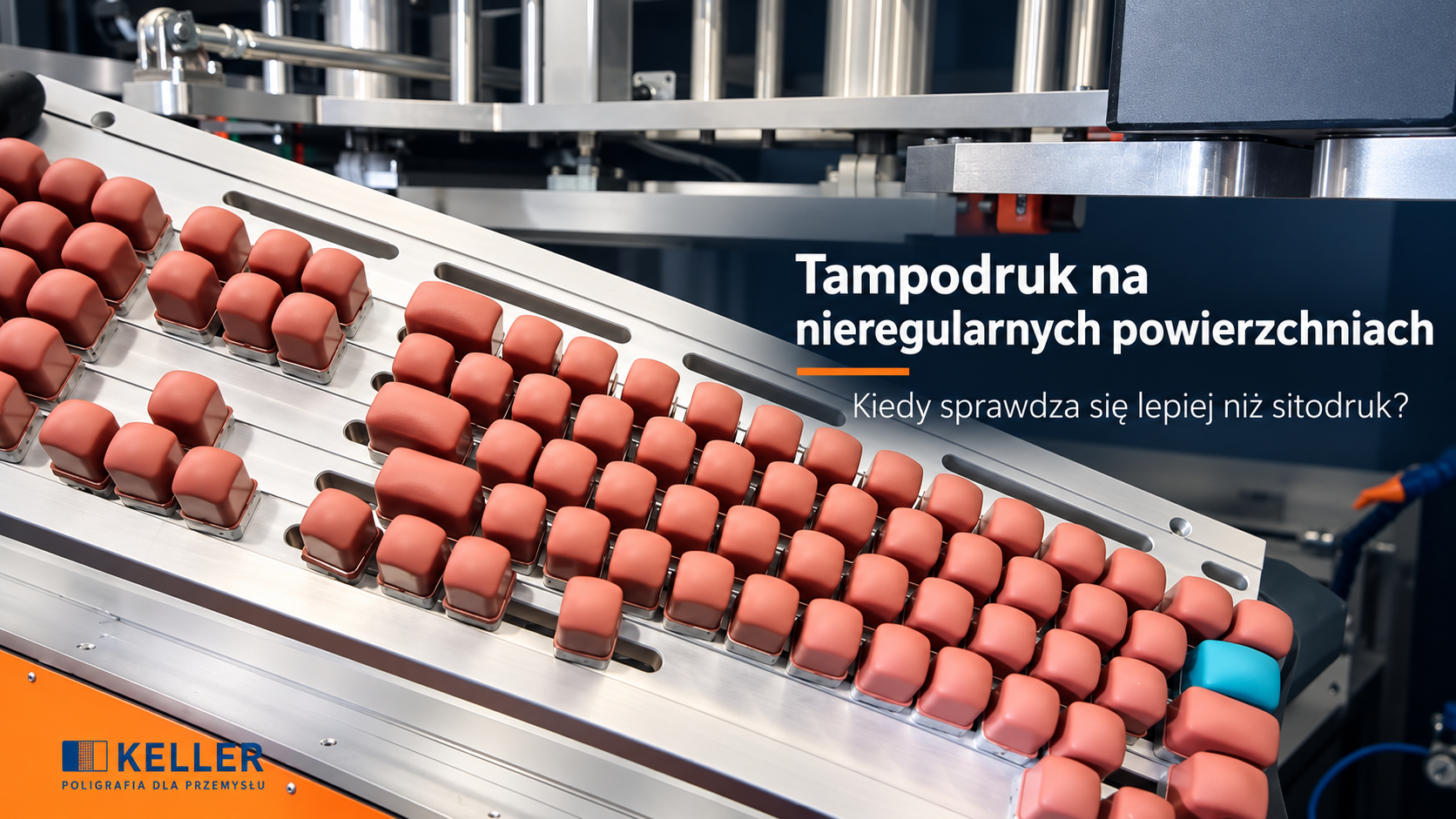
Not every detail has a flat, regular, and easily accessible surface. In industrial production, it's often necessary to apply a logo, symbol, scale, or marking to a curved, convex, concave, or very small element. In these situations, screen printing isn't always the best solution.
Pad printing on uneven surfaces is particularly effective when the product's geometry makes it difficult to transfer graphics directly through the screen. Thanks to the flexible pad, precise printing is possible even on more complex shapes.
Why does pad printing cope with irregular shapes?
In pad printing, the ink is placed on a specially prepared matrix. A silicone pad picks up the image and then transfers it to the product's surface.
The most important advantage is the pad's flexibility. When pressed, it can adapt to the shape of the part and reach surfaces where a traditional screen would have limited contact with the substrate.
This makes it possible to print on irregular shapes, rounded, concave, convex surfaces and small technical elements.
Which elements are better suited for pad printing?
Pad printing is used, among others, for marking:
- buttons and keys,
- knobs and switches,
- pens,
- corks and caps,
- small enclosures,
- automotive components,
- household appliances components,
- electronic parts,
- medical details (syringes),
- pharmaceutical products (tablets),
- small cylindrical elements,
- objects with convex or concave surfaces.
However, it's not just about the product's shape. Pad printing also works well when the print area is small, the graphic is close to the edge, or access to the marking area is difficult.
A good example is buttons or knobs. The print can occupy a very small area, but at the same time, it must be precisely aligned with the element's geometry.
Pad printing vs. screen printing – when does the difference matter?
Screen printing works very well for larger surfaces and details that can be stably positioned relative to the screen. It allows for good coverage and larger print areas.
Pad printing is especially advantageous where the surface is small, spacious, or irregular. The flexible pad allows the graphics to be transferred to places that would be difficult for a screen to reach.
This doesn't mean that pad printing is generally superior to screen printing. It is a better choice when the geometry of the part makes it difficult to transfer the graphic evenly using screen printing.
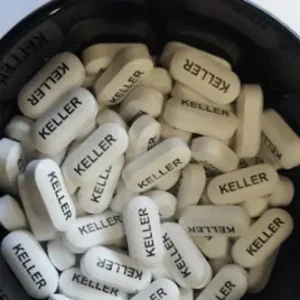
Pad printing – use in industrial production
Pad printing is used in many industries, including automotive, household appliances, electronics, advertising, pharmaceuticals and the production of various types of technical components.
In mass production, however, the ability to print on difficult surfaces is not the only factor. The following are also important:
- stable fastening of the detail,
- repeatable positioning,
- proper selection of tampon,
- selection of paint for the material,
- ability to work with several product variants,
- adequate efficiency of the entire process.
Therefore, the pad printing machine should be adapted not only to the technology, but above all to the specific detail and production conditions.
When to choose pad printing instead of screen printing?
Pad printing machine may be a better solution especially when:
- the detail is small,
- the surface is curved, convex or concave,
- the print is in a hard-to-reach place,
- the print area is small and requires precise positioning,
- the product has an irregular shape,
- the geometry of the detail makes it difficult to use the screen.
The final choice of technology should also take into account the material, type of graphics, required durability and the expected production volume.
This is why, in industry, pad printing and screen printing are not competitive technologies in every application. Rather, they are two distinct methods, each with advantages for different product types and surfaces.
Not sure which technology is best for your product? Contact Keller. Based on the part's shape, material, print location, required durability, and projected production volume, we'll help you select the right printing method and machine configuration.