


Private: News
Screen printing on T-shirts – what is it and how is textile printing performed?

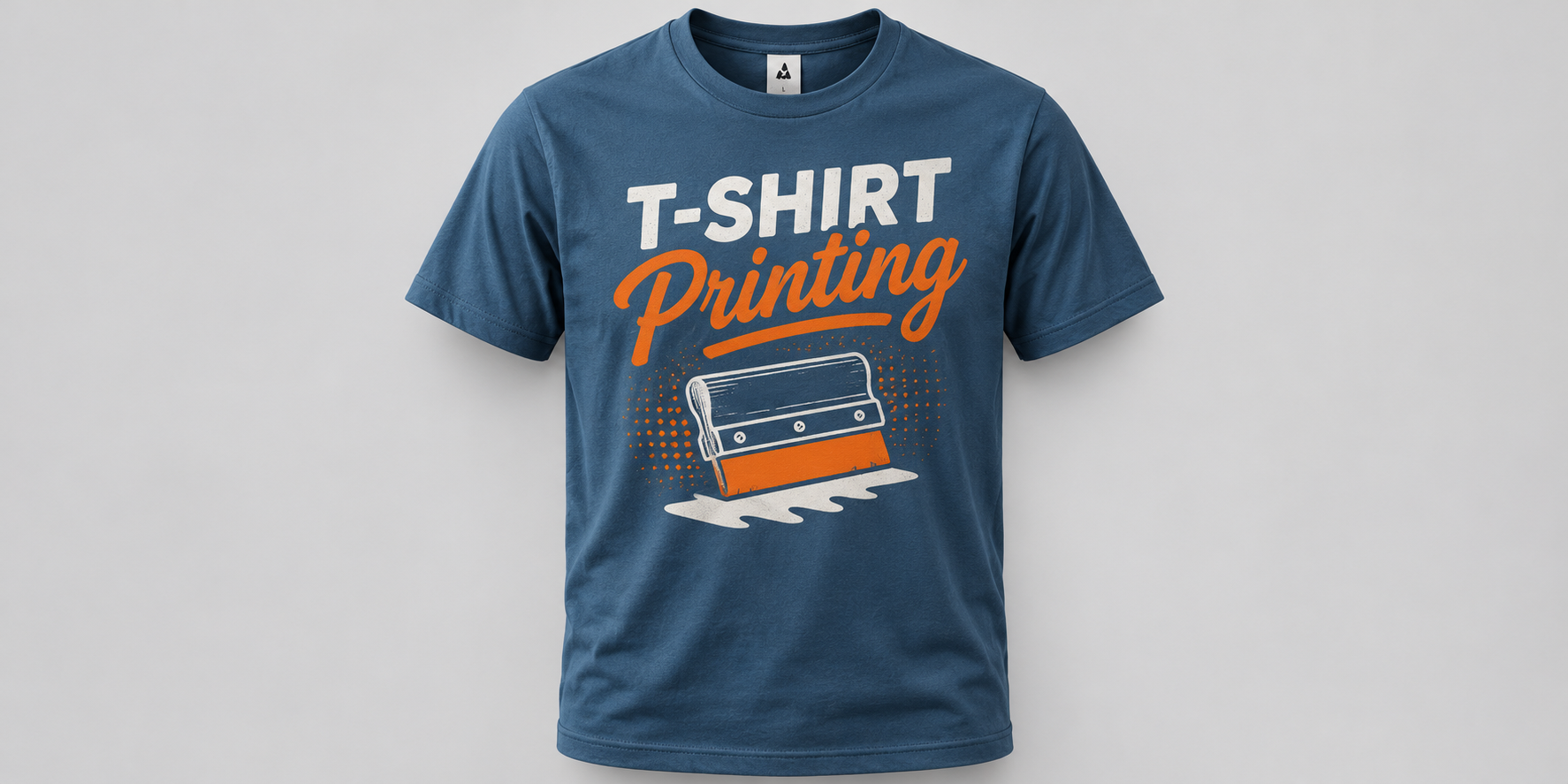
Screen printing on T-shirts This is one of the most well-known methods for printing on clothing and other textiles. The technique can be used both for hand-printing a single T-shirt and for automated production of hundreds or thousands of pieces.
The operating principle in both cases remains similar. The graphic design is reproduced on a specially prepared screen, and then the ink is pressed through the open mesh using a squeegee. This transfers the print directly onto the fabric.
What is the screen printing method on T-shirts?
The basic element of the process is a frame with a stretched screen printing mesh. This is coated with a layer of photosensitive emulsion and then exposed to light according to the prepared graphic design. This creates a stencil, also known as a screen printing matrix, which allows ink to pass only in the areas that create the design.
During printing, the T-shirt is placed on a stable table or work pallet. The screen is positioned directly above the material, and a squeegee distributes the ink and forces it through the screen.
A separate screen is prepared for each color of the graphic. In the case of multi-color printing, subsequent layers must be precisely matched to ensure that the individual parts of the design are positioned correctly.
After printing, the ink requires proper curing. Depending on the ink system used, this requires a specific temperature and curing time. Proper curing has a significant impact on the final result. print durability, resistance to washing and abrasion.
How does screen printing behave on fabric?
Screen printing ink is applied to the fiber surface in a controlled layer. This allows for intense, vivid colors and good coverage, even on dark materials.
Screen printing on clothing It works very well on cotton, but it's not limited to it. It can also print on linen, fiber blends, and selected synthetic materials. For materials like polyester, the ink type, curing temperature, and other process parameters must be carefully selected.
The type of fabric influences, among other things:
- paint adhesion,
- color coverage and appearance,
- print flexibility,
- resistance to washing,
- abrasion resistance,
- durability of the finished product.
Therefore, the same graphic may require slightly different settings if it is printed on a cotton T-shirt, a linen bag or polyester sportswear.
Multi-color screen printing on T-shirts
Multicolour screen printing It is created by applying successive layers of paint. Each color requires a separate screen and precise alignment with the other design elements.
For more complex graphics, precise positioning is crucial. The T-shirt or other textile element should remain in the same position throughout the application of each color.
Flash drying can be used between each step. This allows the previously applied layer to be partially cured, allowing the next element of the design to be safely applied.
This technique allows for the creation of both simple logos and more complex, multi-color graphics. Depending on the ink used, it can achieve highly opaque, expressive surfaces and effects that are difficult to reproduce with some other textile marking methods.
With the right process, screen printing allows you to achieve high quality and high repeatability of prints even with larger quantities.
Not just T-shirts – screen printing on bags and other textiles
Screen printing on T-shirts is the most recognizable application of this technique, but the exact same mechanism can be used on many other textile products.
Screen printing machines is used, among others, for marking:
- fabric and shopping bags,
- drawstring bags,
- sweatshirts and other clothing,
- advertising clothing,
- promotional clothing,
- textile products used as advertising gadgets,
- various flat fabric elements.
The primary change is the method of mounting and positioning the product. A properly prepared work pallet holds the material during printing and allows the graphic to remain in place for subsequent colors.
Thanks to this, a similar process can be used on both a classic T-shirt and a bag, sack or other product made of appropriate fabric.
Describe what type of print you want and we will contact you
Screen printing vs. digital printing, DTF, sublimation and embroidery
Screen printing is one of several popular methods for branding clothing. The choice of technique depends primarily on the type of material, graphic design, print run size, and desired effect.
In DTG printing, the graphics are printed directly onto the material by a digital printer. Digital print works well for small series, a large number of colors and frequently changed patterns.
In DTF technology, the print is first created on a special film and then transferred to the garment using heat. A similar solution is thermal transfer, in which the finished design is transferred to the fabric under the influence of temperature and pressure.
Sublimation works differently – the dye penetrates the fiber structure, which is why the technique is particularly popular for polyester sportswear.
Embroidery or computer embroidery is also an alternative. Instead of a layer of paint, the pattern is created with threads. This creates a completely different visual effect and surface texture.
Screen printed T-shirts They are distinguished primarily by their ability to achieve intense coverage, a distinctive ink layer, and very good performance in larger print runs. With the right ink and proper curing, prints can be durable and resistant to repeated washing.
T-shirt screen printing machine – automation for larger runs
For small quantities, subsequent steps can be performed manually. However, as volume increases, speed, repeatability, and precise print positioning become increasingly important.
In serial production it is used, among others: T-shirt screen printing machine in a carousel design. T-shirts, bags, or other textiles are placed on pallets that are moved between printing and drying stations. This allows for the production of multi-colored patterns in a repeatable cycle without manually moving each product between stages.
Keller designs semi-automatic and automatic carousels tailored to your specific process. Textile screen printing machine may take into account, among other things, the required number of stations, flash drying, the method of attaching the screens, the receipt of finished products and the possibility of relatively quick changeover when changing the pattern.
Thanks to this T-shirt screen printing machine can combine the advantages of screen printing technology with the efficiency needed for mass production of T-shirts, bags and other textile products.