


Private: News
Multicolor printing in industry. What affects color matching and repeatability?

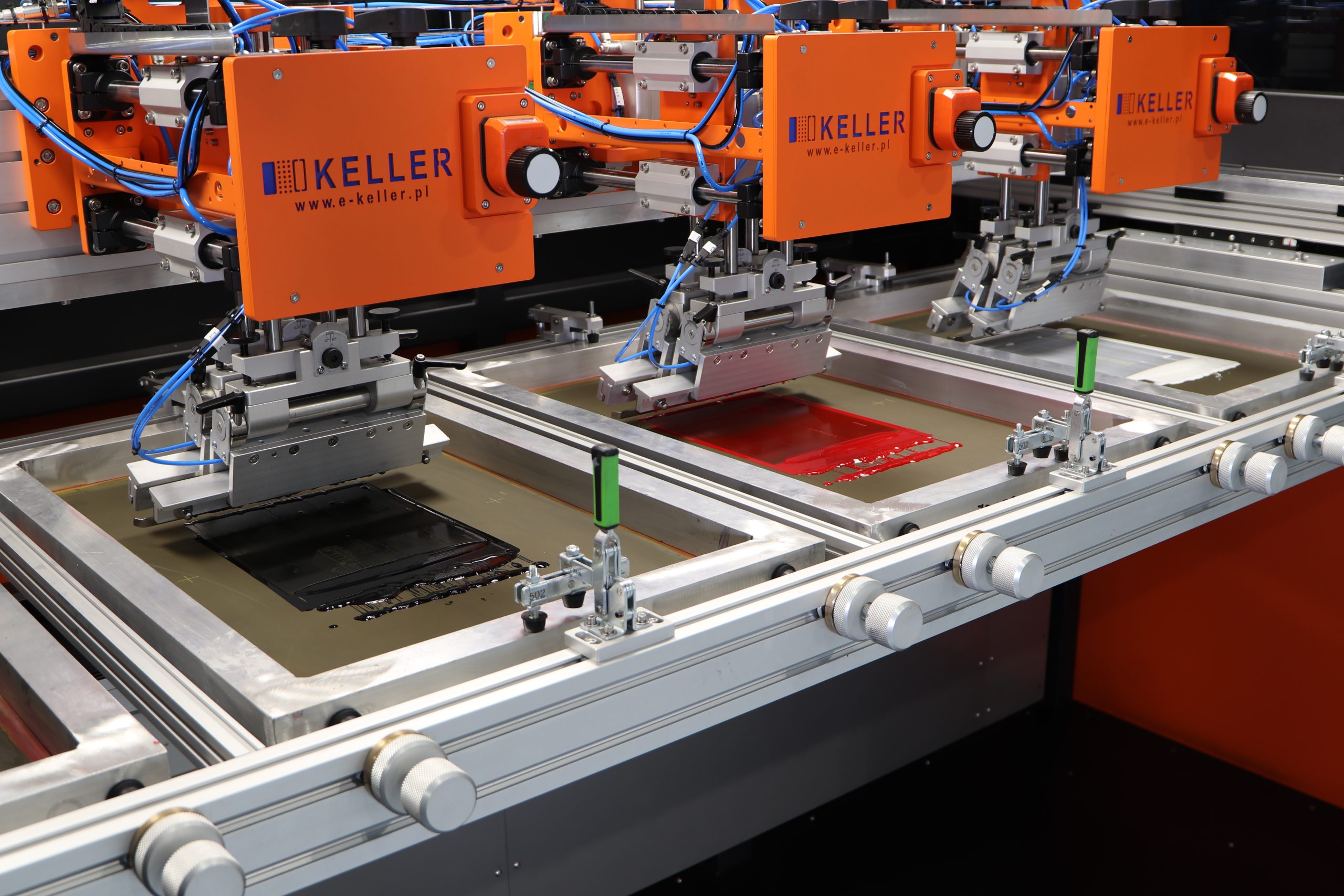
Multicolor printing in industrial production is not just about achieving an attractive visual effect. It's primarily a process in which each color must be applied in the right place, in the right order, and with the same repeatability across multiple details.
In practice, the choice of technology depends on several factors: the product, the material, the surface shape, the required print durability, the number of colors, and the production organization. A multicolor print on a flat panel, a different marking on a device housing, and yet another for a logo on a promotional item or an irregularly shaped technical detail require a different approach.
What is multicolor printing?
Multicolor printing involves applying several colors of ink to the packaging in a precisely planned order, ensuring that each subsequent layer perfectly matches the previous one. Depending on the technology used, subsequent colors may be applied by separate screens (as in screen printing), subsequent pads (as in pad printing), or separate printing stations in multicolor machines, where each color is applied in a different module of the production line.
The most important thing is that each color is positioned precisely in its intended location relative to the previous one. If one color shifts, even slightly, the finished print may lose sharpness, legibility, or consistency with the design. With a simple graphic symbol, this will be less noticeable, but with logos, pictograms, scales, technical symbols, or small details, the problem quickly becomes noticeable.
Therefore, in multi-color printing, color matching is crucial.
Why is color matching so important?
Color matching determines whether a print looks professional and meets quality standards. In mass production, producing one correct piece isn't enough. Maintaining the same effect across the entire batch requires maintaining a consistent finish, often with a high number of details and a constant machine cycle.
The repeatability of multi-color printing is influenced by, among others:
- stable fastening of the detail,
- precise positioning,
- rigidity of the machine structure,
- stability of transport between stations,
- control of the operation of printing stations,
- reducing mechanical play,
- selection of paint for the material,
- surface preparation before printing,
- drying or fixing time,
- the possibility of quick and repeatable changeover,
- print quality control.
That's why, with multicolor printing, simply choosing the right technology isn't enough. The entire process is crucial: from part preparation, through guiding and positioning, to print fixation and final inspection.
Multicolor screen printing. When is it worth choosing?
Multicolor screen printing works well for larger surfaces and details that can be stably positioned during printing. Each color is typically applied through a separate screen, so this technology allows for good coverage, intense colors, and a clear print.
Screen printing is often associated with promotional products and textiles. Colored prints on t-shirts, printed t-shirts, printed cotton bags, and printed textiles are popular examples of this technology. However, in industry, multi-color screen printing has a much broader application. It can be used for, among other things, printing on panels, packaging, plastic parts, glass, technical parts and cylindrical surfaces.
Its advantage is the ability to achieve a durable and legible effect over a larger print area. With a properly designed machine, multi-color screen printing allows for consistent production and precise control over subsequent color application steps.
Multicolor pad printing. When does it work best?
Multicolor pad printing is a good choice for smaller, irregular, convex, concave, or hard-to-reach surfaces. This technology transfers ink from the matrix to the part using a flexible silicone pad. This allows for printing in areas where traditional screen printing would be less convenient or difficult to apply.
Pad printing is suitable for markings on device casings, buttons, knobs, household appliances, automotive parts, electronic components, and technical details. It can also be used on promotional products such as pens with a colored logo, a colorful promotional pen, or a printed mug, especially when the print is small or in a difficult location.
The greatest advantage of pad printing is the ability to adapt the process to the shape of the part. However, with multi-color printing, precise product positioning and control of subsequent stages are particularly important, as each color must be placed in a precisely defined location.
For the purpose of multi-core printing in this technology, we have designed a series TampoMASTER enabling printing in up to 6 colors.
Is hot stamping multi-color printing?
Hot stamping isn't multicolor printing in the same sense as screen printing or pad printing. It's a decoration, marking, and finishing technology in which a foil is transferred to a surface under the influence of temperature and pressure.
Foils in various colors, including metallic ones, can be used, but the logic of the process is different than when applying subsequent layers of paint. Hot stamping machines is most often chosen when the goal is a premium effect: gold plating, silver plating, gloss, metallic finish or decorative highlighting of the product.
In practice, hot stamping can complement other technologies. A product can be printed using screen printing or pad printing, and additionally, selected elements can be enhanced with foil. This is a good solution for packaging, cosmetic products, decorative elements, and details that need to stand out visually.
How to choose the right technology for the product, detail and material?
There's no single best technology for every multicolor print. The choice depends on the product being marked, the material it's made of, the appearance of the print surface, and the desired durability of the finished print.
Multi-color screen printing It's worth considering when the print area is larger or stable, high coverage is needed, the print is clear and intense, and production requires repeatability from piece to piece. It's a good choice for textiles, panels, packaging, glass, plastics, and details with a larger print area.
Multi-color pad printing It's best when the detail is small, irregular, rounded, or difficult to align for screen printing. It works well for technical markings, logos, symbols, scales, housings, buttons, and three-dimensional elements.
Hot stamping It's worth choosing when the goal is decoration, a metallic effect, refinement, or visual differentiation. This technology is useful for products and components with significant sales impact.
It's not always possible to choose the right method based solely on a product photo or a brief description of the material. In practice, it's necessary to consider the shape of the part, the print area, the expected durability, the number of colors, the method of feeding the elements, and the production requirements.
If you don't know which technology will be suitable for your product, contact KellerOur specialists will analyze the detail, material, and process, and then help you select the printing method, machine configuration, and solution that meets your actual production needs. Please complete the form below.
Colors matched to the shape and material
Multicolor printing requires carefully selected technology and a stable process. Screen printing is suitable for larger surfaces and high coverage, pad printing for details and irregular surfaces, and hot stamping for decoration and premium effects.
However, the quality of the print is determined not only by the method itself. Equally important are color matching, detailing, ink selection, surface preparation, curing, and repeatability throughout the entire production process. Therefore, the best results are achieved by a solution tailored not only to the graphic, but above all to the specific product, material, and process.