


Private: News
Food contact paint – how to choose it for glass, ceramics and metal?

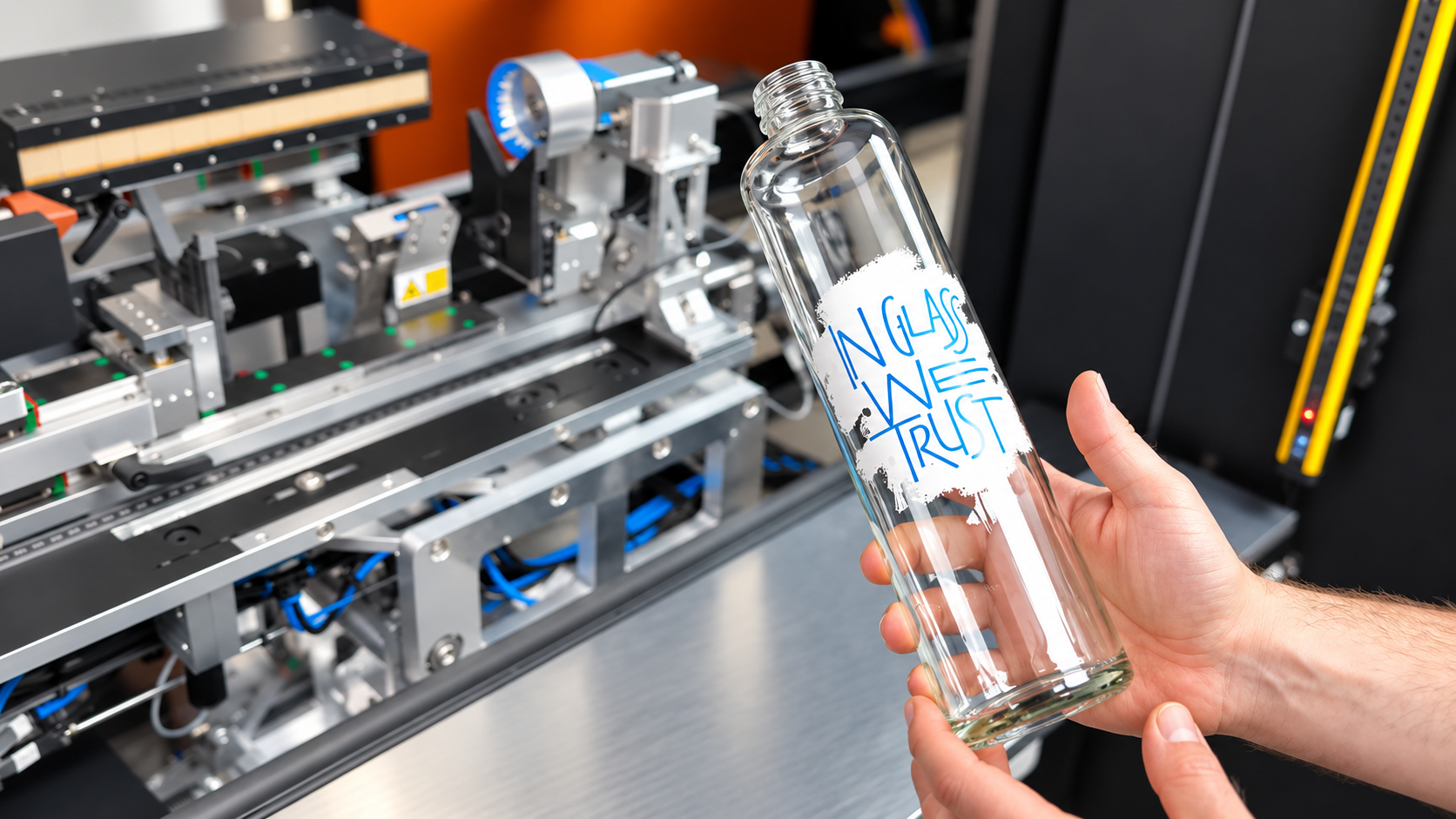
Food paint may suggest an edible product, but in industrial printing it most often refers to paints and varnishes used on packaging, dishes and other products intended for contact with food.
These can include prints on glass bottles, jars, mugs, ceramics, or metal packaging. Just because a product will come into contact with food doesn't mean that every surface is subject to the same requirements. The key is whether the print actually comes into direct contact with the food or is it on the outside of the product.
What does food contact paint mean?
Materials and products intended to come into contact with food should not transfer ingredients to the food in quantities that may pose a health hazard, cause unacceptable changes to the product's composition or affect its taste or smell.
When it comes to printing inks, it's not just the ink formula that matters. The entire finished product and its intended use must be considered.
The requirements for the logo on the outside of a glass bottle are different from those for a coating inside the container or in a place that regularly comes into contact with food.
Therefore, the term paint certified for contact with food It should be considered a simplification. Before using a specific product, check the manufacturer's documentation and the scope of application for which the paint or varnish is intended.
Direct and indirect contact with food
Paint may be applied to a surface that doesn't come into direct contact with the food product. For example, a print on the outside of a jar or bottle.
In such an application, the possibility of migration of the paint components is still important, but the route of their potential penetration into food is different than in the case of printing directly on the contact surface.
However, if the print, varnish or coating is to come into direct contact with food, it is necessary to use a product intended specifically for this type of use and to assess its compatibility with the specific conditions.
Among other things, the type of food, temperature, contact time, washing method and conditions of subsequent use of the product may be important.
Paints for glass and ceramics intended for contact with food
Glass and ceramics are commonly used to produce bottles, jars, glasses, mugs, plates, and other tableware. Their surfaces can be marked with screen printing or other industrial technologies.
Paints for ceramics intended for contact with food and paints intended for printing on glass should be selected primarily for the specific printing location and method of use of the product.
When decorating the exterior, the following are important, among other things:
- adhesion to glass or ceramics,
- abrasion resistance,
- resistance to water and detergents,
- dishwasher safe,
- chemical resistance,
- proper curing of the paint.
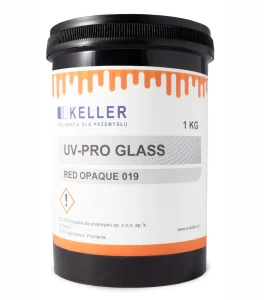
Keller's offer includes, among others: UV-PRO GLASS – a two-component UV ink designed for printing on raw and painted glass, including container glass. This series is characterized by high gloss and dishwasher resistance and is classified as NON-CMR.
Paint and varnish for metal suitable for contact with food
The metal is used in, among other things, cans, caps, lids, dishes and many pieces of food industry equipment.
Here too, a distinction must be made between the decorative print on the outer surface and the layer in direct contact with the product.
Food paint for metal used to mark the outside of the packaging, it can have primarily a graphic function. food varnish for metal located on the inner side can also perform a technical function, for example, separating food from the metal substrate and limiting reactions between them.
Therefore, food-grade metal paint or food-grade varnish must be selected based on its actual function and intended use. Not every product suitable for external packaging printing will be suitable for direct contact with its contents.
Paints for plastic packaging
Materials intended for contact with food also include various types of plastics, including PP, PE, PET and PETG, from which bottles, containers, caps and other packaging are produced.
Keller offers a range of UV inks designed for printing on such materials, including: UV-PRO MAX and other products from the UV-PRO group used in the container and packaging industry.
When choosing a paint for such an application, it is important to consider not only the type of material, but also the surface preparation, required adhesion, chemical and mechanical resistance, and the location of the print in relation to the food product.
What does “food contact approved paint” mean?
In practice, before choosing a paint, it is worth checking not only the word "certificate", but also the documentation regarding the specific product and application.
The following may be of importance, among others:
- declarations and information from the paint manufacturer,
- specific scope of application,
- information on potential component migration,
- results of migration research,
- required curing method,
- type of substrate,
- expected time and temperature of contact with food.
The final assessment should concern the finished product in conditions corresponding to its actual use, and not only the ink itself before printing.
Paint is just one part of the process
When printing on glass, ceramics, metal or plastics intended for food applications, the entire technological process is important.
The substrate material, preparation of its surface, thickness of the applied layer, appropriate hardening, machine parameters and subsequent conditions of use of the finished product are important.
Therefore, the choice of paint for contact with food should begin with answering a few questions: what the product is made of, where exactly the print will be placed, whether it will come into direct contact with food and under what conditions it will be used.
On this basis, you can select the printing technology, surface preparation method and ink system that meets the requirements of a specific application.